The direct answer
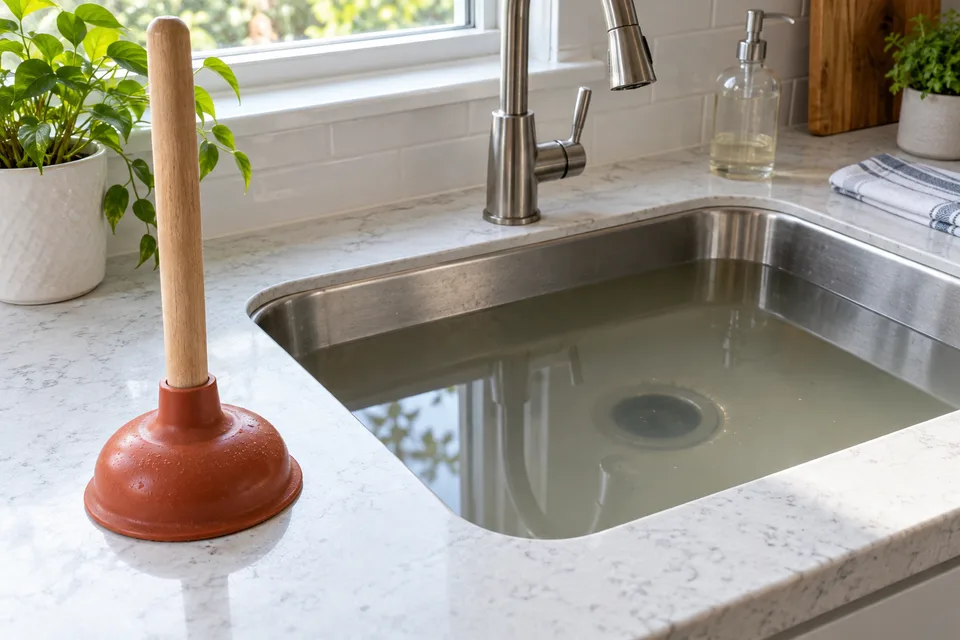
Stop the faucet and disposal first. If there are no drain chemicals in the sink, a careful sink-plunger attempt may help a simple clog. Repeated backups or water appearing at other fixtures need professional assessment.
Check the sink and disposal
Look for visible debris at the strainer without reaching into a disposal. In a double sink, both bowls share downstream drainage; water moving between them does not necessarily mean the disposal is broken. A humming disposal should be turned off immediately. If several household fixtures are slow, stop treating the problem as an isolated kitchen clog.
Try only a controlled clearing attempt
Only plunge when the bowl has enough space to avoid overflow and no chemicals are present. Cover the other sink opening and use gentle, controlled strokes. Stop if joints leak or water rises elsewhere. Do not pour boiling water into an unknown pipe system or mix drain products. Trap removal is inappropriate if shutoffs, access or pipe condition make the work unsafe.
Prevent the next blockage
Scrape food into the trash, collect cooking grease in a separate container and use a strainer. A disposal does not make grease or fibrous scraps safe for the drain. If the clog quickly returns, discuss the branch line and downstream condition rather than repeating the same surface treatment.
When professional help makes sense
Stop owner troubleshooting if the source remains unclear, the symptom returns or the work involves gas, live electricity, sewage or concealed piping. For this issue, explore the checks and repair options for drain cleaning. A provider should explain the diagnosis, scope and price before you authorize work.
For an active uncontrolled leak, use an accessible shutoff only from a safe dry location. If you suspect a gas leak, leave without operating switches and contact the gas utility or emergency services from a safe place. Do not keep using a fixture that sends wastewater into the home.
What to tell the provider
- Where the symptom appears and when it began.
- Which fixtures are affected and any recent changes or work.
- Any visible leak, error code or unusual sound.
- What you have safely checked and whether any chemicals were used.
Ask about a diagnostic fee, current availability, the proposed repair and any access or restoration work. Independent providers set their own terms. This website may receive referral compensation; read how the referral relationship works.
For general leak and fixture maintenance, see EPA WaterSense home maintenance. For heater selection, see the U.S. Department of Energy water heater selection guide. Always follow the specific equipment manual. These resources do not verify local provider coverage.