Common Leak Detection Problems
Recognize the symptoms and understand what may need attention.
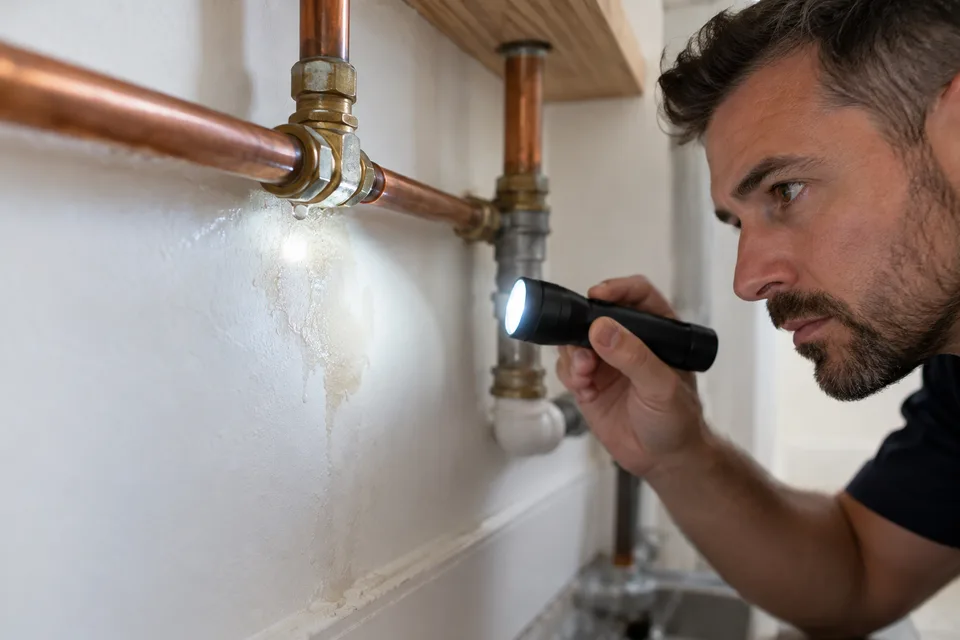
Damp walls or ceilings
Staining may come from a supply pipe, drain, roof or condensation. Note whether it follows fixture use, rain or continuous plumbing pressure before drawing a conclusion.
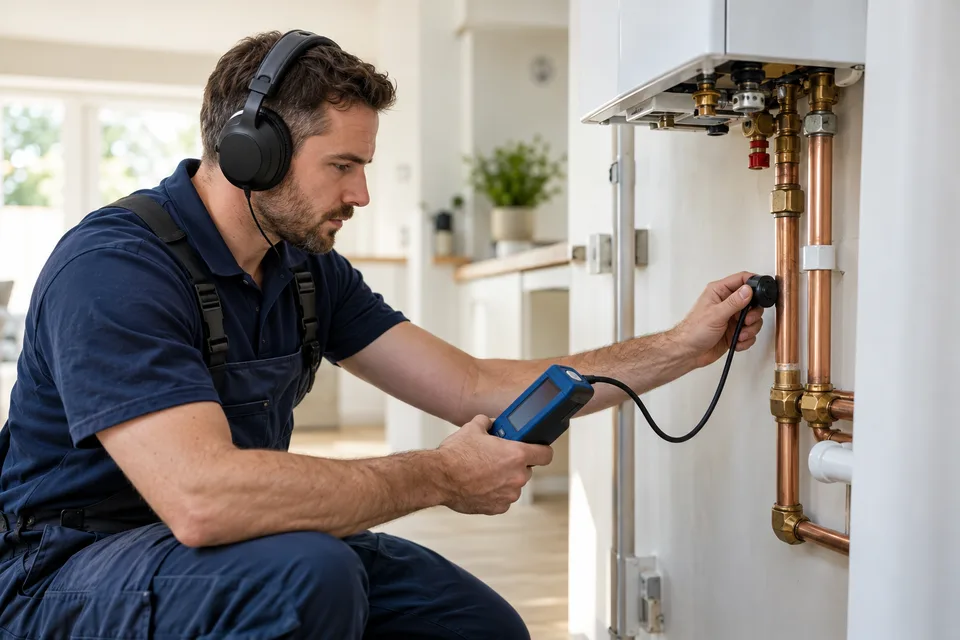
Unexplained meter movement
Meter movement while all intended water use is stopped can warrant investigation, but irrigation, toilets and automatic appliances must first be accounted for.
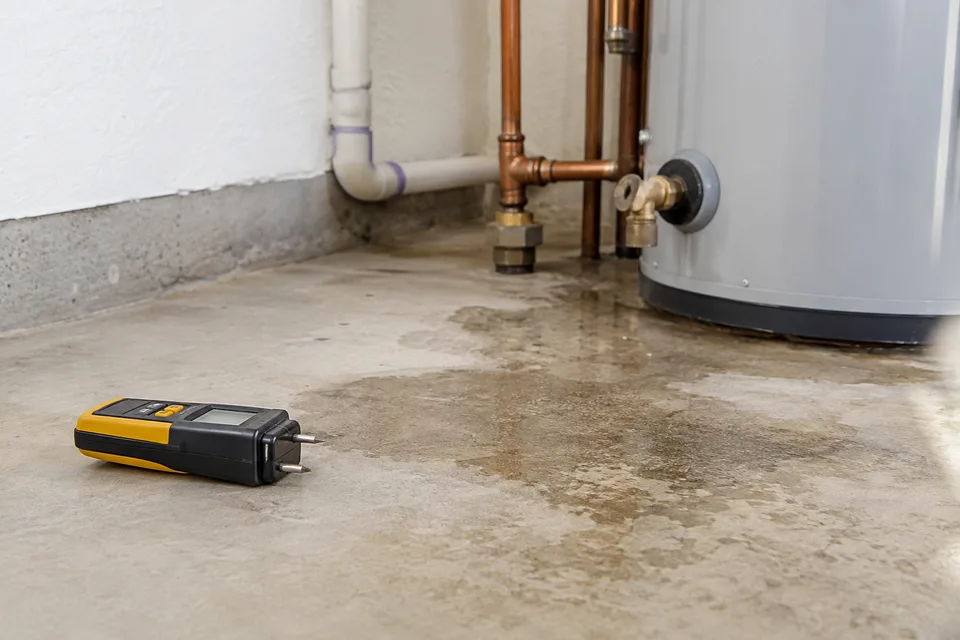
Possible under-slab leak
A warm floor patch, unexplained moisture or water-use change can justify testing. None of these observations alone proves that a pipe beneath the slab has failed.
Document the pattern
Record where moisture appears and when it changes. Check visible supply connections and toilet tanks without removing finished surfaces. If a meter is accessible and safe to read, compare readings during a period with no intended water use.
Use targeted diagnostic testing
A provider may isolate sections, perform pressure tests or use acoustic, thermal or moisture tools. Each method has limits. Ask how findings will distinguish a supply leak from a drain leak or a non-plumbing source.
Choose a repair after locating the source
After the source is confirmed, options may include a fitting repair, localized access or rerouting a section. Discuss restoration of walls or flooring separately and ask what evidence will show that the leak has stopped. Avoid unnecessary demolition based on symptoms alone.
When to Call a Professional
Seek assessment when symptoms persist, the source is uncertain or a safe owner check does not resolve the issue.
- Persistent or recurring: damp walls or ceilings
- Persistent or recurring: unexplained meter movement
- Persistent or recurring: possible under-slab leak
- Water reaching electrical equipment
- Work involving gas, concealed pipes or sewage
- A shutoff that will not operate safely
Keep clear of wet electrical areas and sewage. If you suspect a gas leak, leave without operating switches and contact the gas utility or emergency services from a safe location. Never cap a water heater relief valve.
Local area information
Explore the local context, then confirm provider coverage for your exact address.