The direct answer
Start with visible fixtures, toilet tanks and irrigation. A no-use meter check can help identify unexplained consumption, but locating a concealed leak may require isolation and professional testing.
Rule out ordinary water use
Account for automatic irrigation, ice makers, water treatment regeneration and toilets before comparing meter readings. Read only a safely accessible meter without disturbing utility equipment. Movement during a genuine no-use interval is a reason to investigate; it does not identify which pipe is leaking or prove the leak is indoors.
Record moisture and timing
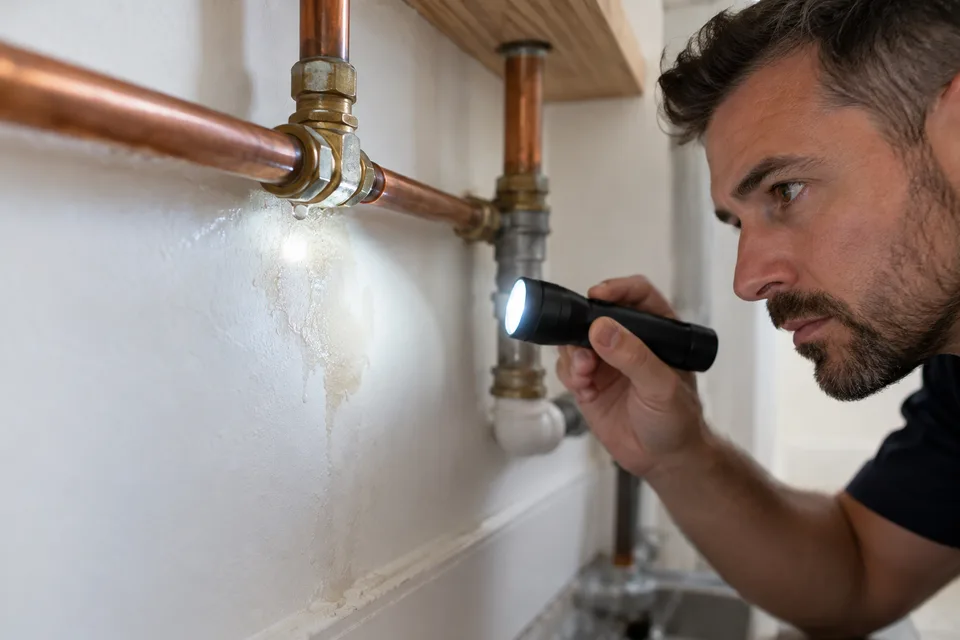
Note stains, damp flooring, a musty odor or the sound of running water. Compare when they occur with fixture use and weather. Condensation, roof leaks and drain leaks can resemble a pressurized supply leak. Photograph the affected area and avoid painting over or closing it until the cause has been established and drying assessed.
Use evidence before opening surfaces
A provider may isolate branches, pressure-test lines or use acoustic and moisture equipment. Thermal imaging shows temperature differences and is not proof by itself. Ask how results will be confirmed before demolition. For active uncontrolled water, use a safe shutoff if accessible and keep away from wet electrical areas.
When professional help makes sense
Stop owner troubleshooting if the source remains unclear, the symptom returns or the work involves gas, live electricity, sewage or concealed piping. For this issue, explore the checks and repair options for leak detection. A provider should explain the diagnosis, scope and price before you authorize work.
For an active uncontrolled leak, use an accessible shutoff only from a safe dry location. If you suspect a gas leak, leave without operating switches and contact the gas utility or emergency services from a safe place. Do not keep using a fixture that sends wastewater into the home.
What to tell the provider
- Where the symptom appears and when it began.
- Which fixtures are affected and any recent changes or work.
- Any visible leak, error code or unusual sound.
- What you have safely checked and whether any chemicals were used.
Ask about a diagnostic fee, current availability, the proposed repair and any access or restoration work. Independent providers set their own terms. This website may receive referral compensation; read how the referral relationship works.
For general leak and fixture maintenance, see EPA WaterSense home maintenance. For heater selection, see the U.S. Department of Energy water heater selection guide. Always follow the specific equipment manual. These resources do not verify local provider coverage.