The direct answer
Unexpected warm flooring, persistent dampness or unexplained water use may warrant testing for an under-slab leak. These signs are not conclusive and can have other plumbing or building causes.
Document the symptoms
Record the area, time and any change when hot or cold fixtures run. Warm floor patches can have non-leak causes, and a crack alone does not diagnose a pipe failure. Visible moisture should also be considered alongside irrigation, drainage and appliance sources. Avoid lifting flooring or drilling into concrete based only on a hunch.
Confirm the source with testing
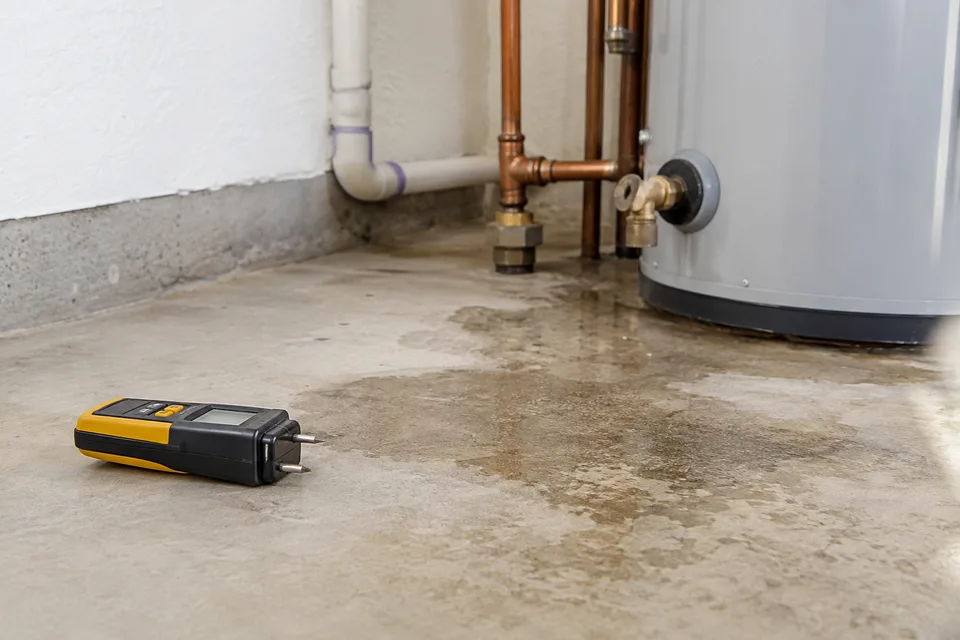
Professional diagnosis may combine isolation, pressure testing and acoustic methods. Ask which section loses pressure and how the location will be confirmed. A moisture meter can identify damp material but does not by itself show the origin. An active leak near electricity or rapid water loss needs prompt safe isolation.
Compare access and rerouting
Depending on the line and building, repair may involve localized slab access or a reroute. Discuss the affected material, finish restoration, utility locating and any effect on other lines. Ask how the repair will be tested and what is included in the written scope before accepting a major excavation proposal.
When professional help makes sense
Stop owner troubleshooting if the source remains unclear, the symptom returns or the work involves gas, live electricity, sewage or concealed piping. For this issue, explore the checks and repair options for leak detection. A provider should explain the diagnosis, scope and price before you authorize work.
For an active uncontrolled leak, use an accessible shutoff only from a safe dry location. If you suspect a gas leak, leave without operating switches and contact the gas utility or emergency services from a safe place. Do not keep using a fixture that sends wastewater into the home.
What to tell the provider
- Where the symptom appears and when it began.
- Which fixtures are affected and any recent changes or work.
- Any visible leak, error code or unusual sound.
- What you have safely checked and whether any chemicals were used.
Ask about a diagnostic fee, current availability, the proposed repair and any access or restoration work. Independent providers set their own terms. This website may receive referral compensation; read how the referral relationship works.
For general leak and fixture maintenance, see EPA WaterSense home maintenance. For heater selection, see the U.S. Department of Energy water heater selection guide. Always follow the specific equipment manual. These resources do not verify local provider coverage.