The direct answer
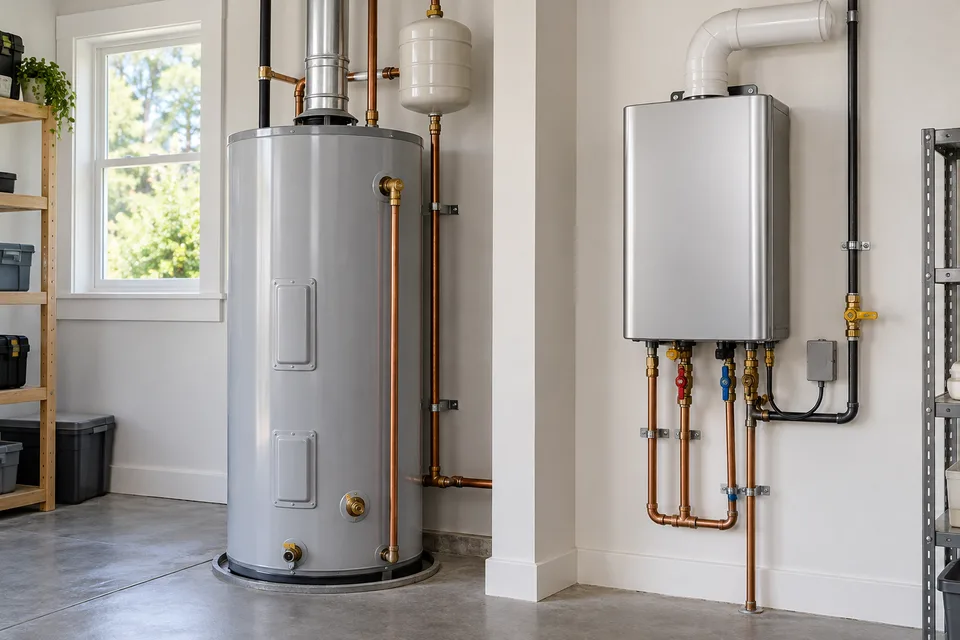
A tank stores hot water; a tankless unit heats it as it flows. The better fit depends on peak demand, available utilities, installation requirements and maintenance—not simply the word tankless.
Compare demand and delivery
Storage capacity and recovery determine how long a tank can support overlapping uses. A tankless unit has a maximum flow at a given temperature rise. Several showers at once can exceed that output. Neither type automatically eliminates the wait for hot water at a distant fixture, which also depends on distribution piping.
Compare installation scope
Replacing a tank with a similar model can differ greatly from converting to tankless. Gas supply, electrical capacity, venting, clearances and condensate disposal may need changes. Obtain a written site-specific scope. Compare the installed cost and operating assumptions, rather than only an appliance price or an unsupported savings promise.
Plan ongoing maintenance
Both types need maintenance appropriate to water conditions and the equipment manual. Sediment can affect storage systems; scale can affect heat exchangers. Ask about the manufacturer service schedule, warranty conditions and availability of qualified service. Keep installation records and avoid choosing a system solely because it is fashionable.
When professional help makes sense
Stop owner troubleshooting if the source remains unclear, the symptom returns or the work involves gas, live electricity, sewage or concealed piping. For this issue, explore the checks and repair options for water heater installation. A provider should explain the diagnosis, scope and price before you authorize work.
For an active uncontrolled leak, use an accessible shutoff only from a safe dry location. If you suspect a gas leak, leave without operating switches and contact the gas utility or emergency services from a safe place. Do not keep using a fixture that sends wastewater into the home.
What to tell the provider
- Where the symptom appears and when it began.
- Which fixtures are affected and any recent changes or work.
- Any visible leak, error code or unusual sound.
- What you have safely checked and whether any chemicals were used.
Ask about a diagnostic fee, current availability, the proposed repair and any access or restoration work. Independent providers set their own terms. This website may receive referral compensation; read how the referral relationship works.
For general leak and fixture maintenance, see EPA WaterSense home maintenance. For heater selection, see the U.S. Department of Energy water heater selection guide. Always follow the specific equipment manual. These resources do not verify local provider coverage.