The direct answer
Switch a humming or stalled disposal off immediately. Isolate power before any manufacturer-approved check, and never put a hand into the grinding chamber. A blockage downstream may be separate from a motor problem.
Humming versus silent operation
Humming can indicate a jam while silence may involve power or overload protection. Neither sound identifies the fault with certainty. Note whether water drains normally and whether the problem began after a hard object entered the sink. Do not keep switching the unit on to see whether it frees itself.
Model-approved owner checks
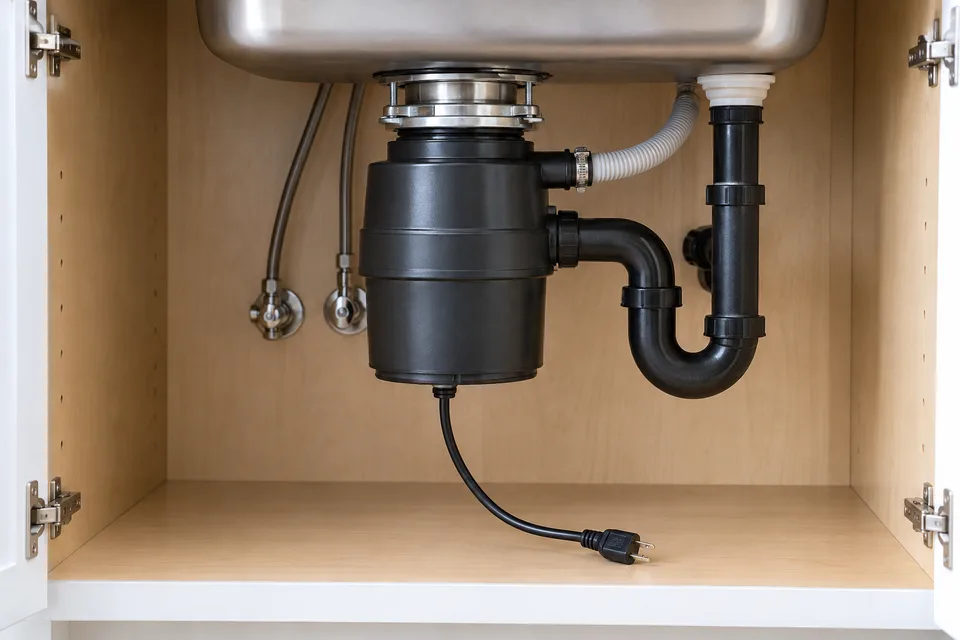
After electrical isolation, use only the procedure in the exact model manual. Some units have an external hex socket and reset button. Never use fingers inside; visible debris may be removed with suitable tongs only while de-energized. Repeated tripping, burning odor, damaged wiring or uncertainty means stop and seek qualified help.
Leaks and replacement decisions
Water at the flange or external connection may be repairable, while a cracked body or failing motor may favor replacement. Drain alignment and electrical connection must suit the new unit. Ask whether the quote includes those details and leak testing. Keep grease, fibrous scraps and foreign objects out of the disposal.
When professional help makes sense
Stop owner troubleshooting if the source remains unclear, the symptom returns or the work involves gas, live electricity, sewage or concealed piping. For this issue, explore the checks and repair options for garbage disposal repair. A provider should explain the diagnosis, scope and price before you authorize work.
For an active uncontrolled leak, use an accessible shutoff only from a safe dry location. If you suspect a gas leak, leave without operating switches and contact the gas utility or emergency services from a safe place. Do not keep using a fixture that sends wastewater into the home.
What to tell the provider
- Where the symptom appears and when it began.
- Which fixtures are affected and any recent changes or work.
- Any visible leak, error code or unusual sound.
- What you have safely checked and whether any chemicals were used.
Ask about a diagnostic fee, current availability, the proposed repair and any access or restoration work. Independent providers set their own terms. This website may receive referral compensation; read how the referral relationship works.
For general leak and fixture maintenance, see EPA WaterSense home maintenance. For heater selection, see the U.S. Department of Energy water heater selection guide. Always follow the specific equipment manual. These resources do not verify local provider coverage.