The direct answer
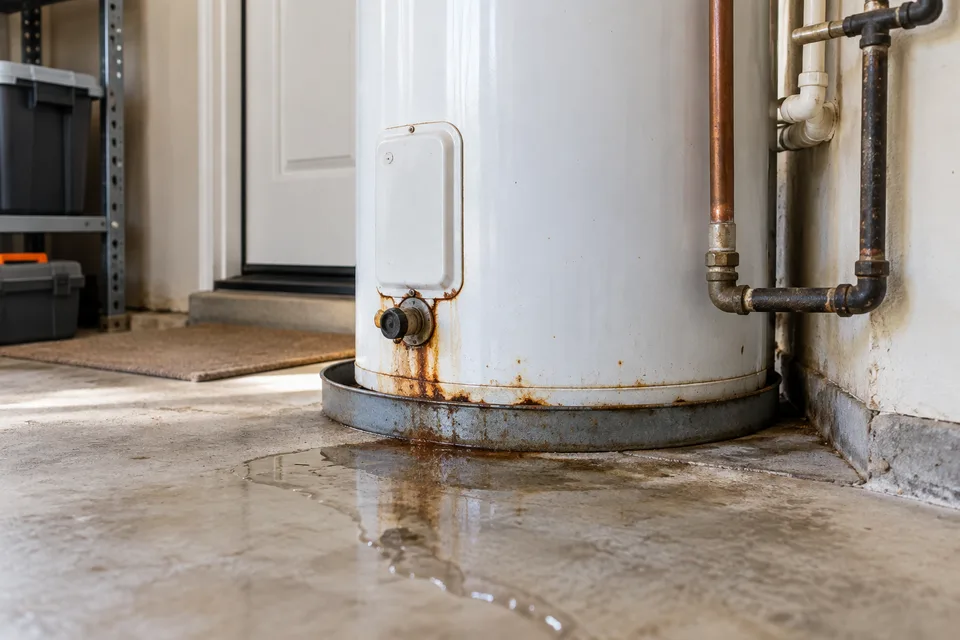
Water beneath a heater does not always mean the tank has failed: it may run down from a fitting above. Stop using the equipment if leakage reaches electrical components, and arrange assessment of an active leak.
Trace visible moisture without opening covers
From a safe, dry position, look at accessible connections above the tank and the drain valve. Moisture can travel along the casing and collect at its lowest point. Do not touch wet controls or remove electrical panels. A relief discharge is also different from a tank-body leak and should never be plugged or capped.
Understand repairable versus tank leaks
A loose connection or valve may have a component-level solution. Leakage through the storage tank body generally requires replacement assessment. Corrosion, age and repeated failures may affect that decision, but a photo of a puddle alone is insufficient. The provider should identify the source and explain the options before work is authorized.
Prepare for a safe assessment
If safe, follow the manufacturer instructions for shutting down the unit and close an accessible cold supply valve gently. If you are uncertain, keep clear and seek help rather than experimenting with gas or electricity. Tell the provider whether water is actively flowing, where it appears and whether the equipment is powered.
When professional help makes sense
Stop owner troubleshooting if the source remains unclear, the symptom returns or the work involves gas, live electricity, sewage or concealed piping. For this issue, explore the checks and repair options for water heater repair. A provider should explain the diagnosis, scope and price before you authorize work.
For an active uncontrolled leak, use an accessible shutoff only from a safe dry location. If you suspect a gas leak, leave without operating switches and contact the gas utility or emergency services from a safe place. Do not keep using a fixture that sends wastewater into the home.
What to tell the provider
- Where the symptom appears and when it began.
- Which fixtures are affected and any recent changes or work.
- Any visible leak, error code or unusual sound.
- What you have safely checked and whether any chemicals were used.
Ask about a diagnostic fee, current availability, the proposed repair and any access or restoration work. Independent providers set their own terms. This website may receive referral compensation; read how the referral relationship works.
For general leak and fixture maintenance, see EPA WaterSense home maintenance. For heater selection, see the U.S. Department of Energy water heater selection guide. Always follow the specific equipment manual. These resources do not verify local provider coverage.