The direct answer
A toilet commonly runs because water escapes past the flush seal or the fill valve keeps sending water into the overflow tube. Watch the tank after one flush to distinguish these patterns.
Look inside the tank
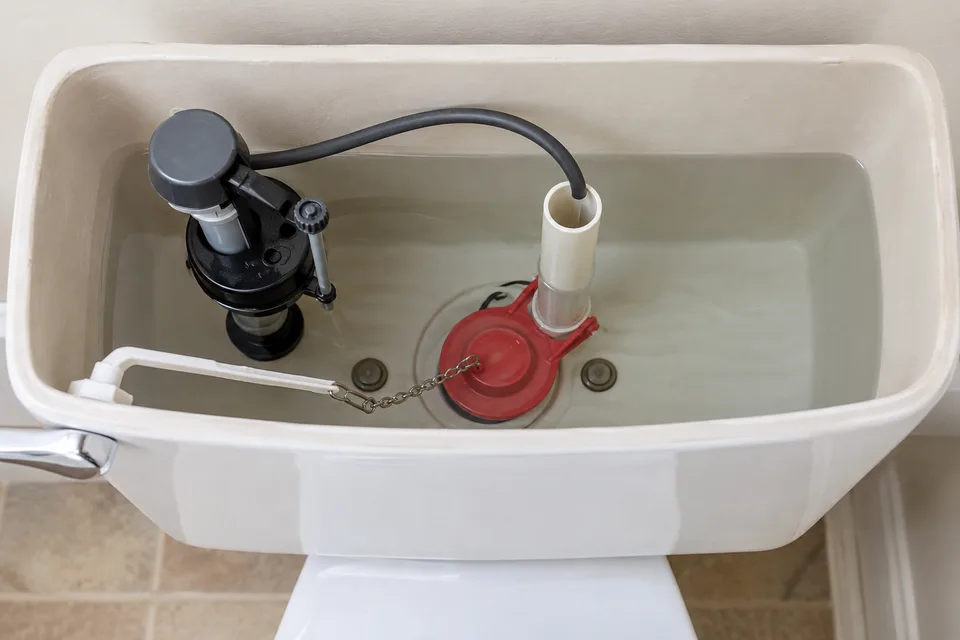
Lift the porcelain lid carefully and set it flat on a secure surface. A chain caught under the flapper can prevent sealing. Water continuously spilling into the overflow suggests a fill-level or valve fault. Do not bend old parts or force a supply valve. If the bowl is also rising or draining poorly, stop flushing and investigate drainage separately.
Use a simple leak check
A toilet leak dye tablet used according to its instructions can reveal water passing from tank to bowl without flushing. Observe whether the fill valve cycles on after a quiet interval. Do not assume a faint hiss means the same part has failed in every toilet; canister and flapper systems use different seals. Take a photograph and record the toilet model.
Choose the correct repair
A replacement seal or fill valve must suit the fixture. Turn off and confirm the water supply before any manufacturer-approved owner task. A leaking shutoff, cracked tank, persistent base leak or corroded fasteners warrants professional help. After repair, confirm the tank fills to the specified line and remains quiet between uses.
When professional help makes sense
Stop owner troubleshooting if the source remains unclear, the symptom returns or the work involves gas, live electricity, sewage or concealed piping. For this issue, explore the checks and repair options for toilet repair. A provider should explain the diagnosis, scope and price before you authorize work.
For an active uncontrolled leak, use an accessible shutoff only from a safe dry location. If you suspect a gas leak, leave without operating switches and contact the gas utility or emergency services from a safe place. Do not keep using a fixture that sends wastewater into the home.
What to tell the provider
- Where the symptom appears and when it began.
- Which fixtures are affected and any recent changes or work.
- Any visible leak, error code or unusual sound.
- What you have safely checked and whether any chemicals were used.
Ask about a diagnostic fee, current availability, the proposed repair and any access or restoration work. Independent providers set their own terms. This website may receive referral compensation; read how the referral relationship works.
For general leak and fixture maintenance, see EPA WaterSense home maintenance. For heater selection, see the U.S. Department of Energy water heater selection guide. Always follow the specific equipment manual. These resources do not verify local provider coverage.